Donde La Vida No Vale Nada: Scattered Thoughts on Organized Abandonment & Ideological Retrenchment in Oakland
Scattered thoughts from E14 Notes on Oakland, a land of organized abandonment and ideological retrenchment. Big money, big housing crisis, and big social rebellion meet in this coastal nexus in ways we should be paying attention to.
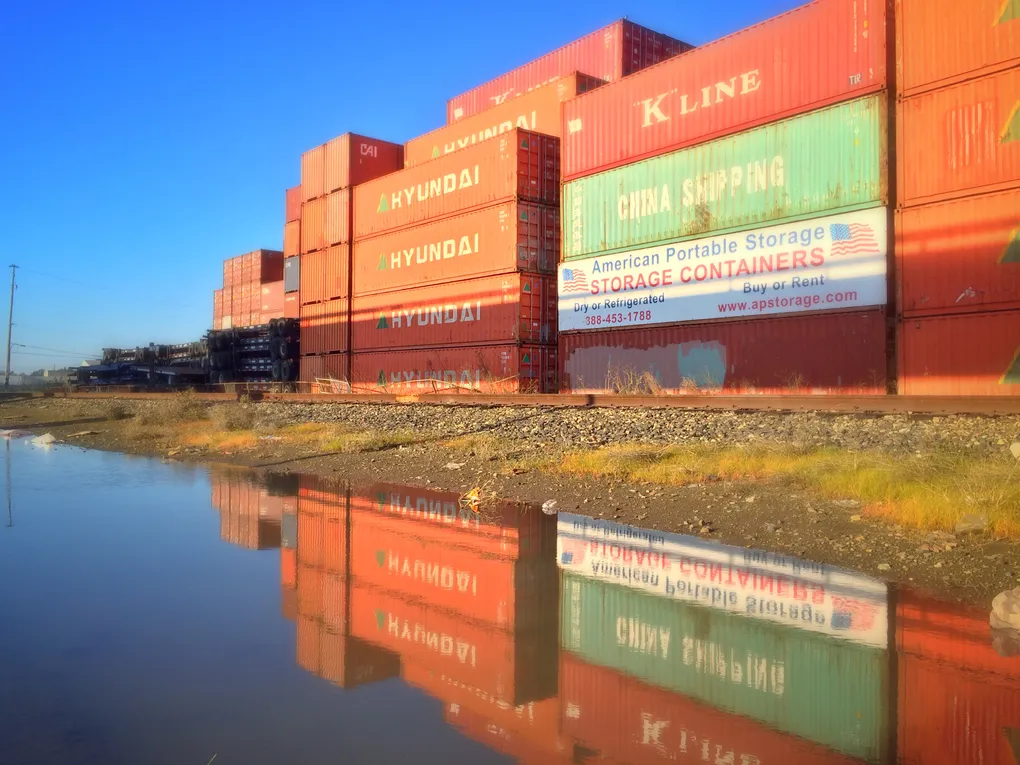
by E14 Notes
“Oakland, California. Donde la vida no vale nada. Donde la ciudad nos tiene abandonados. Oooooaaklaaaand Caaaliiifooooorniaaaaa!!!”*
-Gregorio Roman, IG: @oakland_california_2023
“Oakland California. Where life isn’t worth anything. Where the city has abandoned us. Oooooaaklaaaand Caaaliiifooooorniaaaaa!!!” To almost anyone in the Town these days, these words are all-too-familiar. The IG videos follow a formula: depicting scenes from East Oakland streets—police chases and other activity, burnt out abandoned vehicles, dilapidated boarded-up buildings, smiling community members on the street or on bikes, and the occasional promotion of local taquerias and other business. The account has spawned a spinoff clothing line with screen printed t-shirts , hoodies, and even hats worn proudly by those lucky enough to get ahold of them. Most recently, they covered local anti-ICE protests that went largely unnoticed in local media.
This IG account’s popularity lies in its simplicity and relatability; it quite literally just depicts what many residents see as they go about their daily business, providing a tongue-in-cheek window into the texture of daily life often ignored or spectacularized in local news, politics, and popular media. Anybody cruising down major arteries like E 14th Street can attest to the fact that the images circulated on this account and others like it seem to reflect back to us our own reality. Notably—with the exception of promotional videos—the majority of what the account posts are ambiguously captioned “Oakland California,” without additional commentary or framing: this is kinda just how things are these days. For many, it’s a mirror into their reality, for others it can be read as crafting negative imagery around Oakland, contributing to a growing sense that things are out of control and something has to be done. And maybe that’s just how it is. Or is it?
Where We’re At
Even for those who question the narratives circulating on social media, it’s clear that shit is getting harder for the poor and working-class denizens of Oakland’s sprawling flatlands.1 Skyrocketing inflation, a decades-long housing crisis, episodic eruptions of street violence, and the tactical and ideological failures of progressive alternatives have left a vacuum of despair, nihilism, and skepticism. Many people have been living on the razor’s edge for far too long. In a fragmented present, images become the truth, shaping an ideological consensus about the source of the malaise of the current conjuncture - shaping the public itself. Political crises are constantly being constructed and reconstructed to serve various interests, more often than not having to do with property and class aspirations.
It honestly feels pretty fucking bleak out here these days—politically and otherwise. In a political terrain marked by a municipal budget crisis, recent recalls of ‘progressive politicians,’ post-2020 crime wave narratives, and general ideological retrenchment, a clear-eyed analysis of the present can feel daunting. From our limited viewpoint, a few things might be happening here:
1) As others have observed, there is a lot of fucking money flowing into astroturfed right-wing political and media campaigns; the ‘doom loop’ narrative is real and pervasive. This has served to shape an ideological consensus that Oakland is worse than it has ever been—in terms of crime, political corruption, and general infrastructure—and a narrative that progressive politicians are solely to blame: It’s time to ‘get tough’ on the criminals and low-lives and clean our city up. Their success has been palpable, judging from the recent recalls of progressives like Sheng Thao and Pamela Price.
2) East Oakland’s flatlands have been at the center of the perpetual crises of housing, underdevelopment, joblessness, poor health, and violence since at least the 60s. Decades of organized abandonment2 by the state have produced a material context ripe for revanchist political solutions promoting development and wealth creation. These solutions rely on state violence, which is directed toward a racialized, classed ‘other’ that is at once the horde at the gates and the enemy inside, leeching up from the streets yet always somehow alien, not one of ‘us.’ In this landscape, the politics of authenticity and representation remains potent, obscuring the undertheorized, complex, and layered racial and class fissures that permeate the geographies of Oakland’s flatlands.
3) Yet, at the same time, undercurrents of social and cultural rebellion are woven into the fabric of daily life in many flatland communities. While the forms—sideshows, Bikelife, graffiti, looting etc.—often lack a coherent political content, the ongoing legacy of youth rebellion represents an organic practice of negotiating and refusing structural conditions of state violence and abandonment. These anti-political practices and organizational forms are usually written off as criminality or delinquency having little to do with political struggles. Precisely for this reason, they exist in tension with the politics of polite society, progressive politicians, or the Non-Profit Industrial Complex.
We want to think through these currents, analyzing the relationship between a general context of organized abandonment, property interests both within and outside the community, and the recent turn to law-and-order sensibilities before turning to youth street culture as an undertheorized influence on (anti)political alternatives.
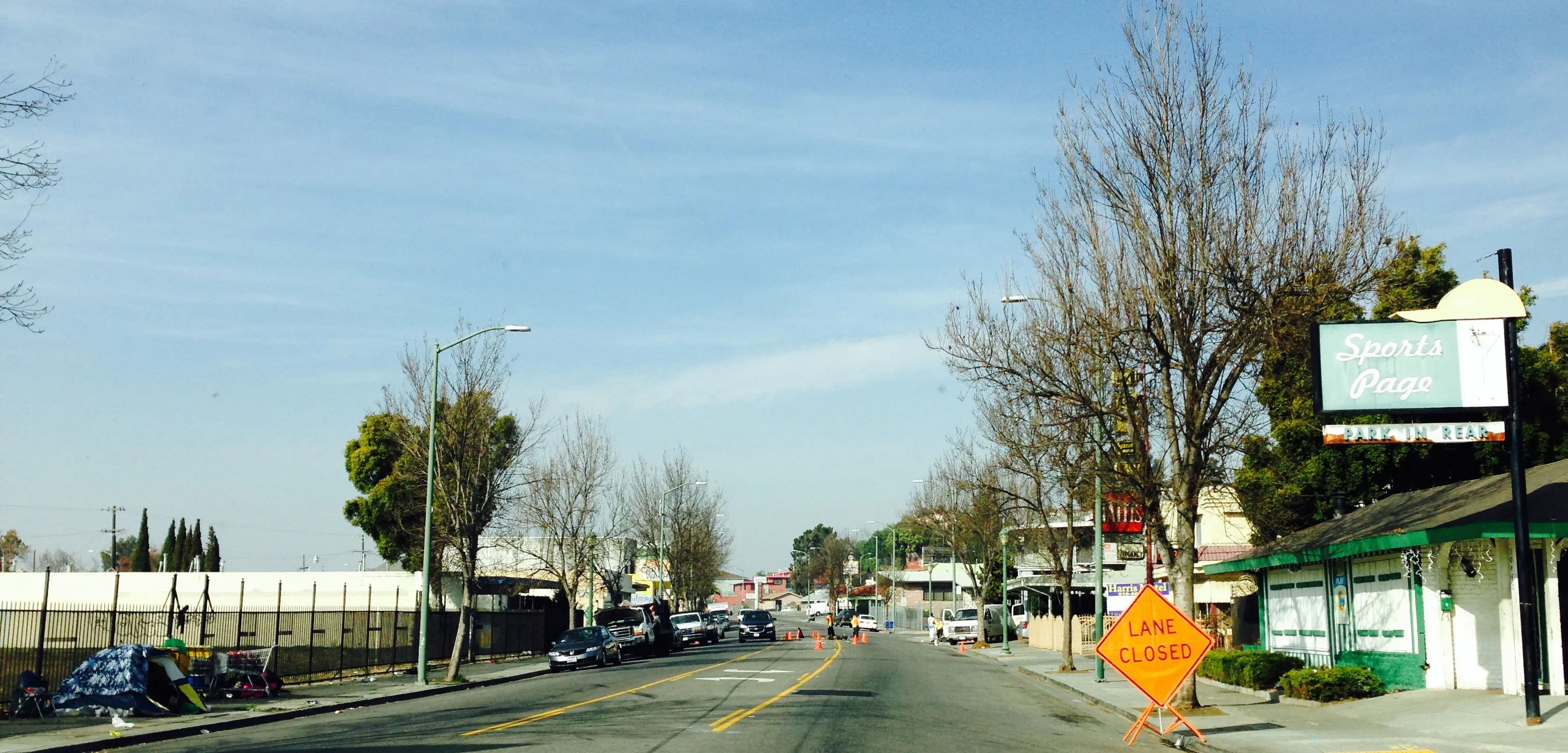
“You Can’t Play Politics With Public Safety”: Social Media, Representation, & Narrative Work
People from outside the flatlands tend to view places like East Oakland as monolithic, as ‘the hood’ or ‘the ghetto.’ But a neighborhood is never just one thing. The reality is that within ‘the ghetto,’ there are tenants, landlords, homeowners, drug dealers, unhoused people, salaried professionals and tradespeople, undocumented migrants, and long-term unemployed residents all within the same several-block radius.
In the last couple decades, waves of long-term, generational residents, particularly Black homeowners, have left East Oakland for greener pastures like Antioch, Patterson, and other central valley exurbs. For those that want to stay but struggle to afford it, rising rents and foreclosures often don’t leave many choices. Holding on can be precarious. Yet many do still hold on, joined by more recent waves of migrants. It remains one of the last places in the city where working-class families have a chance at home ownership, or at least marginally cheaper rent. The Latine population—composed of both homeowners and renters—has grown immensely. In the last several decades, East Oakland has become increasingly Spanish (and Mam) speaking, attracting waves of migrants through the Bay Area’s booming construction and service sectors and Oakland’s status as a Sanctuary City’ This demographic transition in turn has brought up complex conversations around belonging and community identity in a section of the Town that was until recently majority Black.
Meanwhile, as encampments of displaced people are cleared from the lucrative real estate hotspots downtown, they have shifted eastward. With tensions already running high, those people —the ‘crackheads,’ ‘crazy people,’ ‘homeless’—absorb the blame for rapidly changing and deteriorating social conditions. The result is a reactionary political pragmatism that seeks to address issues in the community at the level of the symptom rather than the root.
Enter the Doom Loop: a representation of Oakland as a shithole city overrun with criminals, a warzone driven into the ground by corrupt politicians and lawless ‘ghetto’ criminals. Popular social media pages like Bay Area State of Mind, Bay Area Kulture, and others provide a constant stream of spectacular, decontextualized imagery of looting sprees, street violence, and seemingly inescapable fentanyl and homelessness epidemics. If we are to believe the comments, Oakland is indeed Gotham City. One can ascertain the political implications of this imagery in the unabashedly pro-Trump rhetoric promoted by these pages and others like them since last November. In a context where there is a dearth of local news, social media too often fills that void, making this phenomenon concerning to say the least.
In the aftermath of the pervasive post-2020 ‘crime wave’ narrative, a tacitly law-and-order (dare we say ‘proto-fascist’) sensibility seems to be growing even among the working class and poor racialized majority. This is nothing new, but for some reason we don’t talk about it enough. Racialized people in the flatlands are rendered abstract illustrations of the violence of capital and the state. In need of representation, there is a ‘we’ who must fight for ‘them.’ These ungrounded assumptions elide a hard-pill for leftists to swallow: a lot of people in the community often hold incoherent or, at worst, downright fucked up political views. Patronizing, infantilizing narratives do us no good here.
Indeed, the self-righteous progressivism of local politicians and organizations—the misleadership class—too often falls flat for people who live with organized abandonment every day. For those that have lost loved ones to street violence, vague political projects like the 2020-21 Defund OPD campaign or abstract, virtue signaling appeals to racial justice are unable to grapple with the depth and complexity of the trauma. These tensions are amplified through the spectacular lens of social media, which has influenced the deep-seated consensus that ‘soft on crime’ policies are to blame for the current state of affairs. Safety becomes ‘public safety,’ a policing framework that beckons struggling residents who may otherwise be sympathetic to structural transformation. For example, during the Defund OPD campaign, a major point of tension within Oakland’s Reimagining Public Safety Taskforce was the feeling that defunding would only worsen problems. Many of these residents identified as multi-generational East Oaklanders and property owners. They came out hard against any prospect of defunding the police, asserting their position as ‘authentic’ and ‘representative’ of an entire community. For them, defunding was an outside imposition on residents who actually wanted more police funding. If they’ve taken everything else away from us, why would we let them take the last government service left? In this case, ‘public safety’ came to stand in for a deeper set of anxieties and contradictions that the liberal-to-progressive politics of the Defund campaign failed to connect with.
The flatlands have been at the center of crises of housing, underdevelopment, joblessness, poor health, and violence since at least the 60s. The deep-seated legacies of homeowner and property politics in the area have shaped expectations about prospects and prosperity. Since the 1960s and 70s, homeowner’s organizations and local media have sounded the alarm about blight, violence, drug dealing and addiction, and juvenile delinquency. Indeed, the compounding impacts of state violence, deindustrialization, organized abandonment, and underdevelopment have profoundly reshaped the conditions of everyday life in the low-lying parts of the city. Yet, the dominant narratives of these conditions consistently blame problem groups of people, especially criminals, drug users, and the unhoused, for the general malaise.3 This ideological consensus around the need to ‘get tough’ on criminals in turn serves as a warrant to authorize increasingly punitive policing of ‘problem places’: apartments, projects, street corner economies, encampments, etc. The police are a necessary force in order to keep things in ‘order’ - in other words, to maintain property values.
From this perspective, the specter of (Black) youth criminality looms ever-present. ‘Those’ youth are out of control. Something has to be done. Going back to the ’60s, as growing unemployment, urban decline and blight became central to local War on Poverty debates, The Oakland Tribune reported ‘gangs of hooligans’ throwing rocks and bottles at police patrol vehicles quite regularly, alongside eruptions of looting, vandalism, and general delinquency. These racialized images cohered through the ’70s, ’80s, and ’90s into the recurring media archetypes of lawless drug dealers, pimps, and violent gang members. Yet, too many in the community either gloss over this history or accept this narrative about ‘street culture,’ believing that there’s something inherent in Oakland’s underground economies and street politics that can only be fixed by the same systems that brought them into being. The terms of order here are organized around an opposition of hardworking citizen-subject on one hand, and undeserving criminal who only has themself and their choices to blame on the other. This simplistic good/evil narrative is tied into ideological investments in an idealized nuclear family household and aspirations for an ordered, private life—the American Dream. All of this emerges out of a general context in which generations of racialized dispossession and state violence have made these aspirations an impossibility.
We can see a flavor of these politics in pragmatic center-right visions of East Oakland politicians like Noel Gallo, Loren Taylor, and Treva Reid, who emphasize public safety, local business development, and homeownership. In neighborhoods that have been for too long neglected by the state, the prospect of coupling public safety with wealth creation becomes desirable. Promoting development and cleaning up our neighborhoods while keeping our families here—what’s not to like?
Yet, these politics are not as organic as they appear. As journalist Ali Winston notes,4 powerful vested interests are closely entangled with this brand of reactionary politics. The recall campaign, according to Winston, was almost entirely financed by local oligarchs like tech investor Ron Conway and hedge fund executive Richard Dreyfuss, part of a grey-money network covertly funding a whole manner of revanchist efforts like the recalls, repealing the 2020 eviction moratorium, and much more. The astroturfed voter education entities they fund, like Empower Oakland, were seemingly omnipresent in social media ads during the last election cycle, pushing a hardline pro-policing/public safety agenda and endorsing local candidates amenable to these interests. These networks, alongside the landlord interests who have for decades dominated California politics, were crucial sources of support for politicians like Loren Taylor who sought to expand the size and scope of policing, with the ostensible goal of making Oakland great again.
Empower Oakland5 in particular presents itself as a grassroots formation designed to remedy the very real issues plaguing the Town, “a volunteer-led organization focused on common sense solutions to our most pressing challenges.” Their “Common Sense Agenda” addresses seven key issues: tackling the public safety crisis, homelessness, building more housing, restoring governmental trust and accountability, strengthening the local economy and small business, cleaning up blight, and fostering high quality public schools. The slick website and ad campaigns portray a narrative of longtime residents fed up with business as usual, desiring “outcomes over ideology,” and promoting “radical transparency.” On the surface, this seems like something disaffected locals can really get behind. Empower Oakland’s ad campaign relied on spokespeople like generational East Oakland resident, homeowner, and former Reimagining Public Safety Taskforce member Keisha Henderson, whose profile on twitter proclaims “you can’t play politics with Oakland safety.” Her endorsement lent legitimacy and authenticity.
Tech interests aren’t the only powerful players in this field. Local homeowners also wield considerable political influence. Homeowners believe themselves to have the most at stake in community affairs, as opposed to the ‘transients’ living in apartments and tents. This segment sees themselves as fighting an uphill battle to protect their property values and return to a time when things were ‘better.’ When people watched out for each other. When it was safe to go out at night. When people in the neighborhood took pride in the upkeep of their houses and community. A time that maybe never was, clouded by nostalgia and class anxieties about ‘going backward.’ For this social base, concerns about safety, wealth, and stability provide a fertile basis for political appeals to law-and-order.
So, the right-wing turn is not some organic expression of East Oakland, but neither is it purely a conspiracy financed by outside tech and real estate interests. Rather, these revanchist law and order Doom Loop narratives resonate with different segments of the community because they speak to aspects of communal desires for dignified life, albeit couched in a political expression and orientation that makes those aspirations an impossibility. But the ways that people conceptualize dignity, safety, and justice are always-already refracted through dominant understandings of what constitutes a safe, ordered community. In a community fragmented by displacement, state violence, and day-to-day precarity, people tend to fall back on what seems secure.
Meanwhile, the changing political winds, underwritten by a local budget crisis and a national administration seeking to slash social spending altogether, are eroding the already fragile infrastructure and funding streams for robust NPIC and NPIC-adjacent community projects aimed at violence prevention, service provision, and cultural and community programming. The progressive gains of the last decade, particularly those post-2020 achievements, are turning into losses. With local organizations incapable of undertaking even baseline defensive measures to protect existing wins, it is no mystery why state-facing progressive liberalism lacks popular support among its supposed constituency. Careerism, ego, and the contingency of private and governmental grants, funding sources, and patronage networks often seem like insurmountable barriers to building durable community networks capable of community defense and self-determination. Any nascent movement with teeth in the flatlands must go beyond the dead-end strategies of community development, non-profit coalitions, and the Bay Area Democratic Party machine.
If we are to move past the tired rituals of politics as usual, then we must find new groundings for our action, new viewpoints, new accomplices. For us, this means taking seriously the activities, desires, and analysis of racialized youth and rejecting political resistance invested in optics and respectability. Our solutions lie with us, but maybe not in the way many of us think.
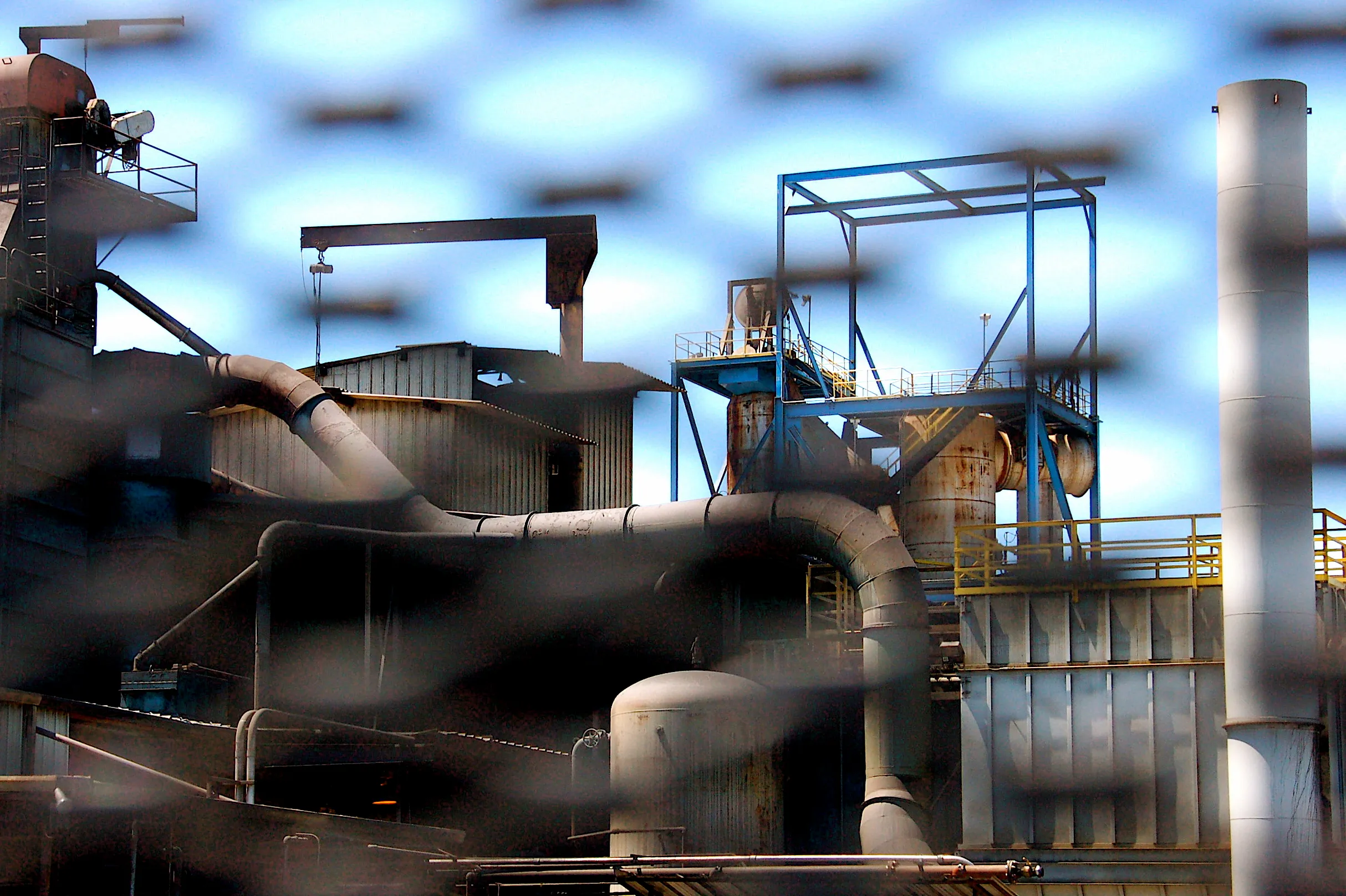
‘Sideshow Mentality’, Ideological Incoherence, & Anti-Political Rebellion
Flatland youth don’t need to be told how to rebel. From sideshows, to graffiti, to music, to social organization, to the teams of SE bikes, dirt bikes, and 4-wheelers that momentarily take over the streets, defying gravity while carrying out gut-wrenching stunts against oncoming traffic, local youth cultures are steeped in a long tradition of saying fuck you to people who try to tell them what to do. Our intention here is not to romanticize; indeed, the complex dynamics of the flatlands are rife with their own contradictions and violence. However, as organic forms of rebellion grounded in the fabric of daily life shaped by all of what we have discussed so far and more, there is much that can be learned by taking this shit seriously.
In early February 2025, in response to intensifying ICE raids on immigrant communities across the country, many grassroots calls to action were circulated on social media, WhatsApp groups, and Spanish-language radio. In particular, in the days before Monday February 3rd, calls for a national “Day Without An Immigrant” emerged, echoing 2006’s massive pro-immigration movements and calling for immigrants and their allies to skip work and school and refrain from shopping.
In Oakland, the loosely-organized grassroots calls were put out for protests in two locations: predictably in Fruitvale Plaza in the heart of the predominantly Latine Fruitvale district, and less predictably two mobilizations planned for several miles away on 98th Ave. and International Blvd. At 11am, a youth-heavy bike Ridout was to head towards the Fruitvale action. At 5pm, there was to be a grassroots community protest on the street corners. This section of Deep East Oakland rarely sees this type of mobilization. @Oakland_California_2023 covered both actions, keeping residents informed of when things were popping off and what was happening. The Fruitvale protest was large and lively, lasting into the night. The 98th Ave action, taking place on one of East Oakland’s largest major thoroughfares, was much smaller but grew steadily through the evening, with attendees circulating between the two protests. The energy was beautiful: mamalonas and scrapers blasting corridos, banda, and Santa Fe Klan, sporting Mexican and Central American flags and cruising up and down International Blvd, while back at the Plaza community members danced and celebrated in the streets with their flags and signs. The protests themselves were not clearly directed by any formal organization, and this kept things dynamic throughout the day.
Interestingly, local youth were tactically and logistically pivotal in the spread of information within and between both protests. Occasional sideshows broke out on the intersection of Fruitvale and International and in other locations, disrupting the otherwise respectable veneer of this nascent movement, embodying the ‘radical joy’ non-profits won’t shut up about while effectively clogging the arteries of circulation and reclaiming public space. Sheisty mask-clad youth on SE cruisers and dirt bikes kept attendees informed about changing plans for movement as well as police activities, making use of both technology—snapchat, facetime, etc—and the flexibility offered on two wheels.
As night fell in Fruitvale, the tension in the air was palpable. Young people on the street corners and in cars and bikes sought to extend the general desmadre of the day as they shared buzzballs, modelo, and Hennessy. However, police were able to break through the line of cars blocking International Blvd, effectively shutting down the Fruitvale protest fairly early in the evening. In response, the revelers quickly reorganized themselves to bring their rebellious celebration back to 98th, where episodic sideshow activities continued into the night. These pop-up and cat-and-mouse tactics animate the area’s heavily criminalized sideshow culture and often serve to exhaust police energy and resources.
In the days following, the ‘sideshow mentality’ of this segment of youth protestors was heavily criticized by supposed allies and ‘leaders’ of the movement and community on social media. They repeated all the familiar talking points: these kids were distracting from the message, ‘clout chasing,’ and ‘making us look bad.’ Overbaked assumptions about youth street culture remain pervasive, an investment in respectability politics that presents a barrier for advancing the struggle beyond the typical protest movement. Concern over optics, in turn, will serve to limit its capacity to materially contest the actual reproduction of abandonment and misery. Regardless of the conscious intentions of youth rebels, there is something powerful in their refusal to embrace the dead ends of respectability and law and order. This is an anti-political sensibility that at its best points us towards the real sources of our dispossession. Such a sensibility is necessary for the movement to mature tactically and strategically.
Young people in particular remain at the forefront of this movement, as evidenced by the ongoing school walkouts and protests across LA, which are now being organized by local Oakland high school students. We look forward to seeing how these movements develop. Community mobilizations both in Fruitvale and Deep East Oakland continued the following weekend, fostering beautiful rebellious energy in our communities. Mobilizing our people is crucial in building popular energy and a sense of collectivity and common struggle. However, when we see calls to action that specify they are “peaceful,” with “no flag burning” and “no sideshow energy,” we should seriously assess the limitations of this approach and the capacity for such actions to move beyond the terms of order of the dominant society. We must make these tensions and contradictions visible if we are to overcome their limitations and actualize our collective desires for dignity and self-determination. Perhaps embracing some of the ‘sideshow mentality’ would do us some good.
From below and to the east. Towards anarchy and communism.
E14 Distro is an autonomous printing project based out of Deep East Oakland
Footnotes
-
Extending from the forested uplands down to the low-lying of the central East Bay, Oakland has been geographically and socially divided between the wealthier Oakland Hills, middle class Lower Hills, and historically working class and impoverished flatlands of East, West, and North Oakland. ↩
-
Organized abandonment basically refers to the ways the state has responded to the ongoing structural crisis of the ’60s and ’70s; slashing social services and disinvesting in community infrastructure while beefing up an increasingly carceral enforcement arm to deal with the fallout. See: Gilmore, Golden Gulag: Prisons, Surplus, Crisis and Opposition in Globalizing California (2007) ↩
-
“[In 1978 the California legislature passed Proposition 13, which broke with the previous labor-liberal coalition of the welfare state, slashing property taxes, greatly diminishing state funding. For cities like Oakland who’s municipal budgets were already in crisis, this spelled ruthless cuts to social spending and an increasingly punitive form of statecraft as conditions in the flatlands continued to deteriorate, producing a condition that Ruth Wilson Gilmore terms organized abandonment, with dire consequences for nearly all aspects of daily life.”] Rajagopalan, “From Below and to the East: Notes on Crisis, Dispossession, and Containment in East Oakland’s Flatlands” Ampersand, Summer 2023. ↩
-
[https://bleeding-edge.ghost.io/oaklands-summer-of-discontent/] ↩