How to Be Normal About Exercise; or, Why Communists Need Exercise Science
There is no inherent link between exercising and fighting for a better world, nor is there one in rejecting it. There is only the reality that physical fitness constitutes one of many material constraints to the creation and maintenance of a life worth living.
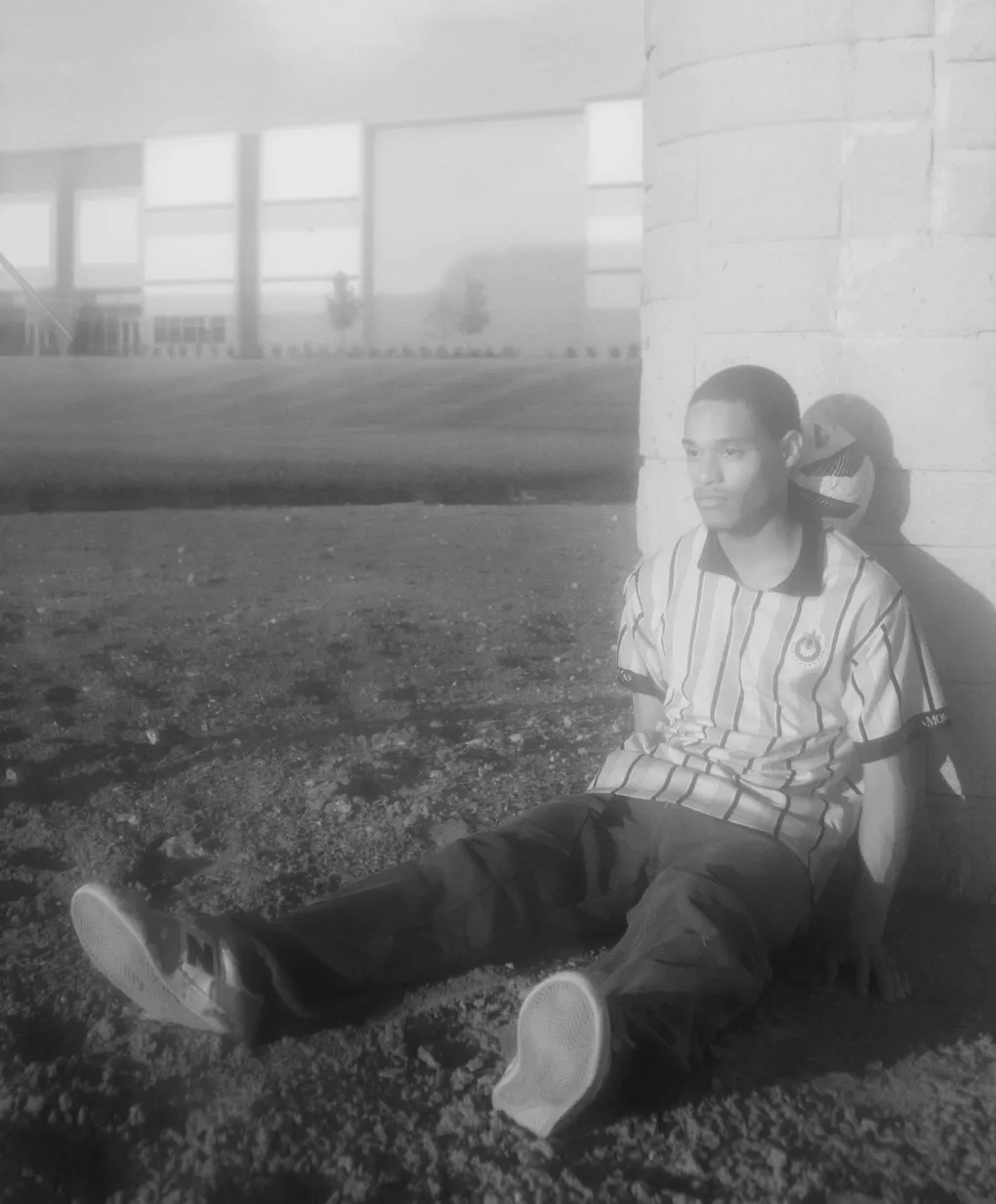
The most memorable games of pick-up soccer I’ve ever played were in a mask, in all black, on the turf field at Cal Anderson Park in Seattle. Everyone who wanted to play would slowly gather in the middle of the field waiting for enough people to start the game. Often, we would juggle together in a circle—attempting to pass the ball amongst ourselves without it touching the ground, using our feet, thighs, chests, and heads. Sometimes the rallies would end abruptly, the ball just stopping dead on the ground in the middle of the circle. Other times the endings were agonizingly long with someone juggling the ball several times in an effort to stabilize themselves enough to pass it off to someone else. This often resulted in an errant touch that would send the player far outside the circle, their last few kicks sending the ball further and further as they desperately tried to keep the rally alive.
It was the first winter after the murder of George Floyd. The CHAZ had come and gone but acts of autonomy remained. The turf field was surrounded by compromised parking meters and businesses adorned with plywood window dressings. Every exposed wall or concrete ledge was adorned with ACAB or 1312, the messages so uniform it was as if the artists had followed some paint-by-numbers kit. On the turf there was a crowd of people running a mutual aid station with hot food, a black bloc clothing swap station, first-aid, medics, and occasionally armed security. The fence that separated the turf from the street was draped with banners, from refugees welcome to the antifascist ultras of the Seattle Sounders. I played soccer here nearly every week for about four months, meeting old and new friends, listening to people trying to stoke the embers of the George Floyd Rebellion, hoping for another hot summer, and preparing for what was to come. I was shocked at how easy and relaxed everything was—an atmosphere fit for a pick-up game, but not the one of tension and unease I had been used to when mixing organized physical activity and left politics.
What came to be colloquially called “antifa soccer”1 is reflective of a renewed interest in left physical culture over the past decade. Although this tradition has a long and rich history,2 the recent wave can probably be pegged to Trump’s 2016 election, when the rise of activities like mixed-martial arts and strength training in popular culture combined with a courageous wave of militant antifascism to produce mostly online groups such as The Swoletariat. That these groups started online makes sense given the budding parallel tracks of online interest in strength training and left politics among young people after the Great Recession in 2007. The Swoletariat successfully wed these two tracks by emphasizing the development of one’s physical capacities as a political form of self and community defense. However, as a social force of its own, it was unable to collectively move beyond its dedicated subreddit page to the gym or the street. Thankfully, we’ve since seen physical activity grow from an often digitally-networked individual pursuit into local organizations where people can be, think, and train together. This includes, but is not limited to, mutual aid distribution centers with gyms, leftist martial arts clubs, body positive gyms, and, of course, antifa soccer teams; it is all really beautiful and inspiring.3
But with growth comes growing pains, and due to the variety of ways one can exercise or express fitness, there is a dearth of shared vocabulary outside of the academic world of exercise science. Publicly, terms like “exercise,” “fitness,” and “physical activity” often carry normative connotations acting on two moral registers: individual (those who exercise are better people), and collective (taking care of your health reduces community healthcare burdens). A common, and reasonable, kneejerk reaction is skepticism that exercise and fitness can be anything more than expressions of social stigma—about body size and physical ability, or disciplinary power such as access to insurance or healthcare. While the 2016 Swoletariat subculture forged a helpful inroad between these two binaries, it often did so by example rather than explanation: reddit posts of a flexed deltoid with a Che tattoo, a reminder that a fascist worked out today, and that one Mao quote about civilizing the mind and making savage the body. All of this succeeded in showing people that it was possible to be a leftist and embrace physical fitness, but it failed at offering a conceptual basis for the relationship between physical and political expression.
While there is no erasing the social context and constraints that condition how these activities manifest in our lives, we often jump into conversations about what these activities mean before having a shared sense of what they are and how we engage with them. Capitalist social relations structure what we do for work, for how long, and what we can buy with those efforts to help renew ourselves and our families for another day in paradise. All this directly impacts how we consume and use energy; simply put, it is the “mathematics of meat in motion.”4 The goal is not to evade the question of normativity, but to put it in its proper place. Only once we have our definitions and our context can we talk about the role our physical capacities should play in the creation and reproduction of our world.
What is and isn’t exercise?
Physical activity is defined as any bodily movement produced by skeletal muscles that results in energy expenditure. The energy expenditure can be measured in kilocalories. Physical activity in daily life can be categorized into occupational, sports, conditioning, household, or other activities. Exercise is a subset of physical activity that is planned, structured, and repetitive and has as a final or an intermediate objective the improvement or maintenance of physical fitness. Physical fitness is a set of attributes that are either health- or skill-related.5
The above is a well-known framework in the physical education and exercise science literature that provides descriptive definitions of physical activity, exercise, and physical fitness without normative claims about what one’s physical capacities should be. The authors go on to detail the health and skill-related attributes of physical fitness as, “cardiorespiratory endurance, body composition, muscular strength, muscular endurance, and flexibility.”
In this framework, exercise is relative. For example, walking one mile could be defined as either exercise or physical activity depending on how it is applied, (is it planned, structured, and repetitive with the intent of improving or maintaining physical fitness?) and one’s current level of physical fitness. It is entirely possible to maintain or increase one’s physical fitness without exercise, assuming sufficient physical activity. Anyone can choose to exercise, but physical activity is a guaranteed part of everyone’s day. What counts as exercise is subjective because its definition hinges on individual-level goals. For example, two people could participate in the same dance class, doing the exact same thing, and one could be engaging in physical activity, and the other exercise—all depending on the final or immediate goals of the dancer. Although the authors present a set of attributes for what constitutes physical fitness, there are no quantitative measures inherently attached to them, giving us space to set our own qualitative (not feeling so tired after grocery shopping) or quantitative (walk 200 yards) standards of physical fitness. If there is a gap between one’s current and desired level of physical fitness, exercise and/or physical activity are ways to close it.
For example, a mail delivery person who walks a five-mile mail route each shift and comes home to cook and clean for a large family might not see a 200-yard walk around the block as contributing to the maintenance or improvement of their physical fitness. This person’s body is adapted to walking much greater distances at work. If we take the same walk and apply it to someone who lives alone and works from home at a desk all day, it might indeed meet the threshold for exercise. Given that this person’s job and home life have relatively low energy demands, a planned 200-yard walk at the end of each day would likely contribute to the maintenance or improvement of their physical fitness levels.
As mentioned above, our definition of exercise requires intentionality. In other words, we have to think we’re doing exercise for it to qualify as exercise. If our mail person considered their walk around the block after work as exercise, then it is exercise, even if its contribution to maintaining physical fitness is marginal. Likewise, our homeworker might just see the walk as a way to get out of the house at the end of the workday, without the objective of maintaining or improving physical fitness. If so, the walk isn’t exercise, even if it is physiologically improving or maintaining their physical fitness.
Outside of gym class and the military, there are few instances in our lives when we are forced to exercise. This component of choice and intention is incredibly important for understanding exercise in our lives because it contrasts so clearly with physical activity, which is mostly determined by our work and household obligations. The freedom inherent in this definition of exercise is part of why it feels like such a burden for some and a key to self-worth and actualization for others. This also suggests that we cannot develop a complete understanding of exercise until we consider why physical activity is so constrained in our lives today.
Physical Activity & Capitalism
Most conversations about exercise start in the wrong place because they start with exercise. Physical activity encompasses all our non-exercise energy expenditure (sometimes known as non-exercise activity thermogenesis, or NEAT), most of which is made up of commuting to work, working, and all the other non-exercise activities that prepare us to work again tomorrow such as cleaning, cooking, family care, and leisure. Aside from genetics, diet, and medication (all incredibly important but outside the scope of this article), these are the factors that set the context for our physical fitness and in turn what activities are likely to appear as exercise for each person. Without considering one’s work, family, and personal life, exercise and its impact on our health appear problematically limitless. To avoid an abstract, “because capitalism” type of response to all this, we must dig deeper into why and how capitalism creates a historically unique relationship to exercise, physical activity, and fitness. Otherwise, we won’t get any closer to knowing what to make of exercise—how to see its role in our lives, how to do it (or not), and what it can show us about our topsy-turvy world.
What makes capitalism unique is its dependence on one particular form of private property: wage labor. It isn’t always evident to think of our ability to work as a form of property, but it is. Not only do we have the “right” to sell our time to an employer as a commodity, or piece of property, but we are also compelled to do so given that the majority of us do not have the means to feed, house, or clothe ourselves without access to the most common form of wages: money. This labor power is our property because it cannot be taken from us against our will—we must enter into a willing exchange between our property (labor power) and their property (money). Unfortunately for us, we don’t get to choose how much our time is worth to our employer, and we only have slightly more control over how long we must work. Sure, there is the choice between part-time and full-time employment, but we don’t control the price of bread, rent, or anything else.
When we sell our labor power for wages, we temporarily hand over our bodies to our employers who act as capital personified. While bosses vary in the degree to which they dictate work effort and speed, these variations have fairly strict boundaries set, not by human health and wellbeing, but by market competition. While capital needs people to act on its behalf, it also needs people to speak for it; for this we have economists. In a paper identifying modest health improvements when France moved from a work week of 39 to 35 hours a week, the authors concluded:
An implication of these results is that policies which reduce working time, such as shortening the statutory workweek, could potentially lead to important health benefits. At the same time, such policies would most likely be costly: for example, output per worker would probably decrease and firms would have to hire additional workers to make up for this shortfall. These additional costs will have to be weighed against the benefits of improved health behavior and health in any policy decision regarding working time.6
It’s absurd, but we live in an absurd world! Our health is considered “too costly” when it reduces profit too much. Working hours are considered “too low” when the cost per unit of production is too far above the global average. Our working conditions and the amount of time we spend there can’t be so bad that we die before Monday rolls around again, but if our health and wellbeing are significantly better than the market average, that starts to raise flags about potential profits being left on the table. The negotiable room for a healthy workplace is between suffering so severely we can no longer work and an acceptable return on investment; the leftovers of a life propelled by profitable private production.
There is No Right Exercise in a Wrong World
With our new-found definitions, we can see the bits of truth that make the individual and collective moral registers of exercise so common. There is indeed a degree of free choice in exercise, but we can only see this free choice as a moral high ground if we ignore the surrounding conditions of constraint that encumber our limited free time with the burden of choice. Choosing to exercise can indeed make us more productive for capital and reinforce negative social norms around body image and health, but this does not necessitate the rejection of exercise as a valuable activity. There is no inherent link between exercising and fighting for a better world, nor is there one in rejecting it. There is only the reality that physical fitness constitutes one of many material constraints to the creation and maintenance of a life worth living. As such, politically contesting this terrain is critical to the communist project.
If we want to be able to do something physical with our bodies we can’t yet do, or we want to look or feel a way we don’t yet, some shift in physical activity or exercise could help achieve these goals. But the conditions under which we do this are largely out of our control. Not only are our conditions constrained, but so too is the expression of our personal goals—what we could even imagine wanting our bodies to do. It is worth taking a second to really think about how fucked that is. This doesn’t mean there aren’t any practical, pragmatic ways to exercise in the face of this disordered arrangement of our lives if we so choose. In fact, you’ve probably heard them before. Find an entry point. Consider the time and activity demands of your work and household obligations. Identify where added activity or exercise might fit. Find an activity (enjoyable, sustainable, measurable, goal-oriented). Rise, repeat, etc. You can do it! Really, you can! But our individual successes under this regime of constraints are only a glimpse of what could be without private property, without wage labor, and with more freedom to choose how we use energy and to what ends.
What made antifa soccer special was not just its ability to socialize physical activity, as any sport, dance troupe, or bird-watching group does, but rather to politicize this activity without making the activity the primary political focus. Anyone could play for as long as they wanted, the only requirement was to wear a mask. There was no demand to do anything in particular, but instead an opportunity for group physical activity where people could self-select the type and degree of activity they wanted: playing different positions and duration in the pickup game, helping organize the mutual aid table and clothing swap, or simply hanging out and chatting. Just go touch turf. For some, these varied activities likely constituted exercise, meaning that this social activity was giving people the opportunity to work toward their personal physical fitness goals in a clearly political space. At the same time, there was no normative pressure to politicize exercise—one’s engagement in exercise was not a prerequisite to participate. For those that did not see it as exercise, there was still the possibility for the physical activity to improve physical fitness while building social and political ties.
When Marx wrote in the Critique of the Gotha Program that society’s banners would inscribe: “from each according to his ability, to each according to his need,” it was the slogan for communist society. Our current abilities and needs are the result of class domination and the struggle against it, meaning that despite being bound by them in the present, we need not treat them as immutable. Collective physical activities like antifa soccer are merely the ground floor, the bare minimum for being able to think together (what are our current abilities?), act together (what can we do with them?), and start asking ourselves how to begin balancing the equation of meat in motion. A communist physical culture must be able to take this shared activity and create a foundation of collective trust capable of going beyond a simple critique of social norms around physical fitness, health, and ability and toward a position that can harness the constrained freedom of exercise—to not only provide support for people to realize their existing desires for their bodies, but to show them new ones too.
Footnotes
-
Mike Lindblom and Crystal Paul, “Seattle Police break up ‘antifa soccer’ game, arrest 7 at Cal Anderson Park” The Seattle Times, December 20, 2020. ↩
-
See Ultra, “Class Combat” (2017), http://www.ultra-com.org/project/class-combat/ and Kyle Kubler, “Regimen: Calculating the New Soviet Person,” Spectre Journal, July 20, 2022, https://spectrejournal.com/regimen/ ↩
-
For specific examples see Woodbine in New York, Liberation Martial Arts in California, and Pressing On Fitness in Washington State ↩
-
Phil A. Neel, “Quarter-Pounds of Flesh” The Brooklyn Rail, Dec/Jan 2024–25. https://brooklynrail.org/2024/12/field-notes/quarter-pounds-of-flesh/ ↩
-
Caspersen et al., “Physical activity, exercise, and physical fitness: definitions and distinctions for health-related research” Public Health Reports 100, no.2 (1985): 126–131. https://pmc.ncbi.nlm.nih.gov/articles/PMC1424733/ ↩
-
Ines Berniell and Jan Bietenbeck, “The effect of working hours on health” Economics & Human Biology 39 (2020), https://www.sciencedirect.com/science/article/abs/pii/S1570677X20301714?via%3Dihub ↩